
Class 1, 2 & 3 Calibration for RF Test Equipment
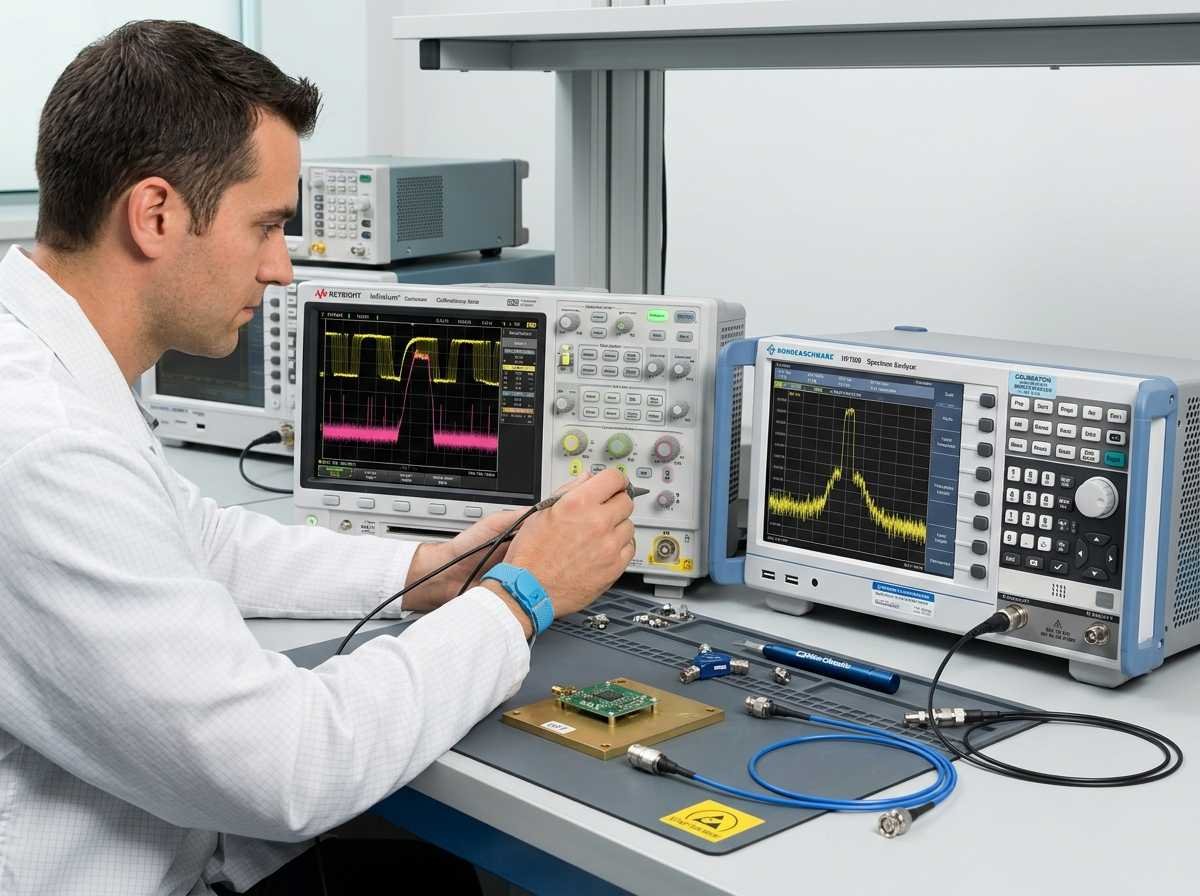
Accurate measurements are essential in RF engineering. Whether you develop electronic products, test communication systems or maintain laboratory equipment, reliable results depend on well-calibrated instruments.
At Niche RF, we understand the importance of dependable RF test equipment. Our calibration services support engineers and businesses that need confidence in their measurements.
This guide explains the differences between Class 1, Class 2 and Class 3 calibration, and how to choose the right option for your equipment.
Get a Quick Quote, fill in and send the below form.
What Is RF Test Equipment Calibration?
RF test equipment calibration compares an instrument’s performance against suitable reference standards. It helps identify measurement errors and determine whether the instrument meets its specified performance requirements.
Over time, electronic components can drift. Consequently, an instrument may display incorrect frequency, amplitude or other measurement values.
Regular calibration helps identify these changes. It also supports quality control, product development and reliable test results.
Class 1, 2 & 3 Calibration: What Is the Difference?
Calibration requirements vary according to the instrument, its application and the documentation required. The following three-level model illustrates how calibration services may be structured.
Class 1 Calibration – Basic Calibration Certificate
Class 1 is a proposed entry-level option for users who need documented calibration results.
Depending on the agreed service scope, it may include:
Verification of specified measurement parameters.
Comparison against suitable reference standards.
A calibration certificate.
Identification of the instrument and its calibration status.
This option may suit general workshop use and applications where detailed measurement data is not required.
Class 2 Calibration – Calibration With Measurement Data
Class 2 is a proposed option for users who require more detailed evidence of instrument performance.
Depending on the agreed scope, it may include:
All applicable Class 1 checks.
Recorded measurement results.
As-found and as-left data, where specified.
Additional information to support quality assurance.
As a result, engineers can review instrument performance before and after adjustment, when applicable.
Class 3 Calibration – Calibration With Measurement Uncertainty
Class 3 is a proposed option for applications that require more detailed measurement evidence.
Depending on the agreed scope, it may include:
Calibration measurement data.
Measurement uncertainty information.
Greater detail for technical review and quality records.
Documentation to support demanding measurement requirements.
Measurement uncertainty helps users understand the range of values reasonably associated with a measurement. It does not, by itself, guarantee that an instrument meets its specifications.
Important: Class 1, 2 and 3 are not universal RF calibration classifications. Confirm the exact scope, certificate contents and accreditation status with Niche RF before selecting a service.
Which RF Test Equipment Can Be Calibrated?
Niche RF supports a range of RF and electronic test equipment. Calibration requirements depend on the instrument model, frequency range and intended application.
Spectrum Analyser Calibration
Spectrum analysers measure signals across a range of frequencies. Engineers use them to investigate harmonics, interference, spurious emissions and signal levels.
Spectrum analyser calibration can assess relevant parameters such as frequency accuracy, amplitude accuracy and frequency response. The exact tests depend on the instrument and agreed scope.
Signal Generator Calibration
Signal generators provide known signals for testing electronic circuits, receivers and communication systems.
Signal generator calibration can assess output frequency and level accuracy. Additional tests may cover frequency stability, modulation performance or output behaviour across selected operating ranges.
For demanding applications, extra measurement points may provide a clearer picture of performance.
Vector Network Analyser (VNA) Calibration
Vector network analysers measure the behaviour of RF components and networks. Engineers commonly use them to evaluate filters, amplifiers, cables, antennas and other RF devices.
VNA calibration can involve checks of relevant frequency and measurement parameters, including reflection and transmission measurements. The scope depends on the model and test requirements.
It is also important to distinguish instrument calibration from the user-performed calibration of a VNA measurement setup using appropriate standards.
Oscilloscope Calibration
Oscilloscopes display electrical signals over time. They are widely used for troubleshooting, circuit development and electronic testing.
Oscilloscope calibration can assess relevant parameters such as vertical gain, timebase accuracy and signal measurement performance. For high-bandwidth instruments, the applicable frequency response and other specifications may also matter.
Contact us for a quote and other supportive consultations on Class 1, 2 & 3 Calibrations.